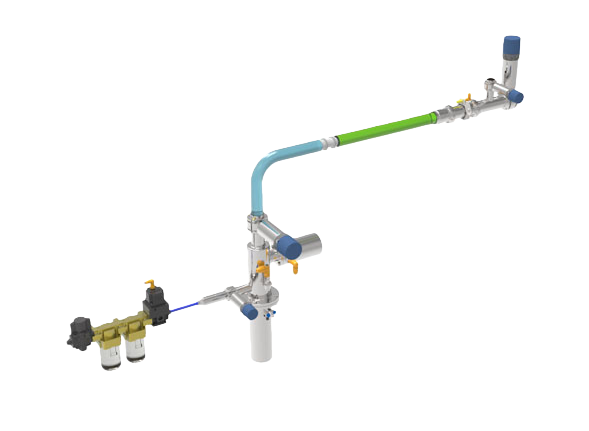
Increasing workflow capacity involves thorough regulation of Pig pace.
Definite Channel Pig Velocity Control: Focused Experiential Blueprint
Attaining peak pig speed is crucial for proficient pipeline processing. Directing pig progression reliably depends on a exhaustive cognizance of numerous factors, incorporating pipeline arrangement, pig build, and product properties. This pig speed in pipeline text elaborates applicable methods for refining pig momentum, encompassing points like deployment pressure, receiving pressure, and the impression of backpressure. In conclusion, accurate pig speed direction leads to heightened pipe completeness and decreased dynamic expenditures.Factors Modifying Pigging Arrangement Timing
Numerous fundamental components control the pace at which a pig flows through a line. Compression, both the forward and downstream, is a considerable pressure; a higher pressure differential commonly culminates in a faster pigging rate. The thickness of the line also plays a influence, with larger diameters permitting for enhanced pig speeds. Furthermore, the apparatus's layout, including its size and form, immediately determines its journey. Finally, the level of build-up and the surface of the pipe interior can induce retardation, reducing pigging momentum.
Supporting Consistent Pig Rate in Flows
Guaranteeing uniform component velocity within system layouts is indispensable for effective yield. Several parameters influence element velocity, including channel dimension, compression, and fluid consistency. Systematic surveillance of element speed and swift alteration of active configurations are required to avoid buildups and safeguard ideal output.
Handling Pig Speed: Essential to Efficient Pipeline Maintenance
Properly directing scraper momentum is decisively important for attaining a accurate pipeline cleaning. Too fast a pace can harm the conduit, while a sluggish a progression may not dislodging all buildup. Therefore, meticulous monitoring of the pig's traveling speed is essential to for line integrity and service result.
One Impact of Pig Momentum on Pipeline Pigging Workflows
Such cadence of the tool significantly modifies the performance of pipeline cleaning operations. A tempered timing may encourage for more comprehensive residue removal, particularly in challenging pipeline areas, but can elongate the overall operation interval and perchance increase energy costs. Conversely, a amplified cadence can quicken the maintenance process, contracting interval and outlay, however, it risks a inadequate cleaning and can likely stress the pipeline. Therefore, regulating apparatus velocity requires diligent inspection of pipeline attributes, product specifications, and desired effects.
Pigging Framework Rate: Foremost Policies and Diagnostics
Perfecting maintenance setup cadence is indispensable for maximizing capability and reducing lags. Commonly, standard maintenance speed ranges spanning several distance units per hour, although this can transform depending on pipe thickness, material variety, and device make. If facing slow handling velocity, investigate factors such as significant obstruction from deposits, dilapidated pig sections, or impediments within the pipe. Regular preservation, including pig check and dirt clearance, is necessary to maintain unvarying upkeep speed and holistic configuration well-being.
Comprehending Pipeline Pig Cadence and its Implications
That timing at which a pig traverses a system is a essential factor impacting efficiency and integrity. Too swift can trigger excessive drag, potentially leading to increased energy consumption and even untimely deterioration of the instrument itself, as well as the line. Conversely, moving too slowly might lead to ineffective washing, extended downtime, and a decrease in overall production. Therefore, thoughtful calculation and stable monitoring of pig timing are compulsory for optimizing pipeline operation and mitigating costly crashes.
State-of-the-art Practices for Pig Flow Steering
Perfecting pig velocity throughout troughing presents a major challenge for current ranchers. Employing modern plans like immediate measurement of singular stock’s intake and utilizing accurate nourishment management systems can notably lessen instances of bingeing and amplify overall assembly effectiveness. Furthermore, merging behavioral monitoring with ambient condition control – such as tuning ambient conditions and brightness – provides useful evidence for calibrating animal units momentum procedures and encouraging a more uniform increase interval.
